
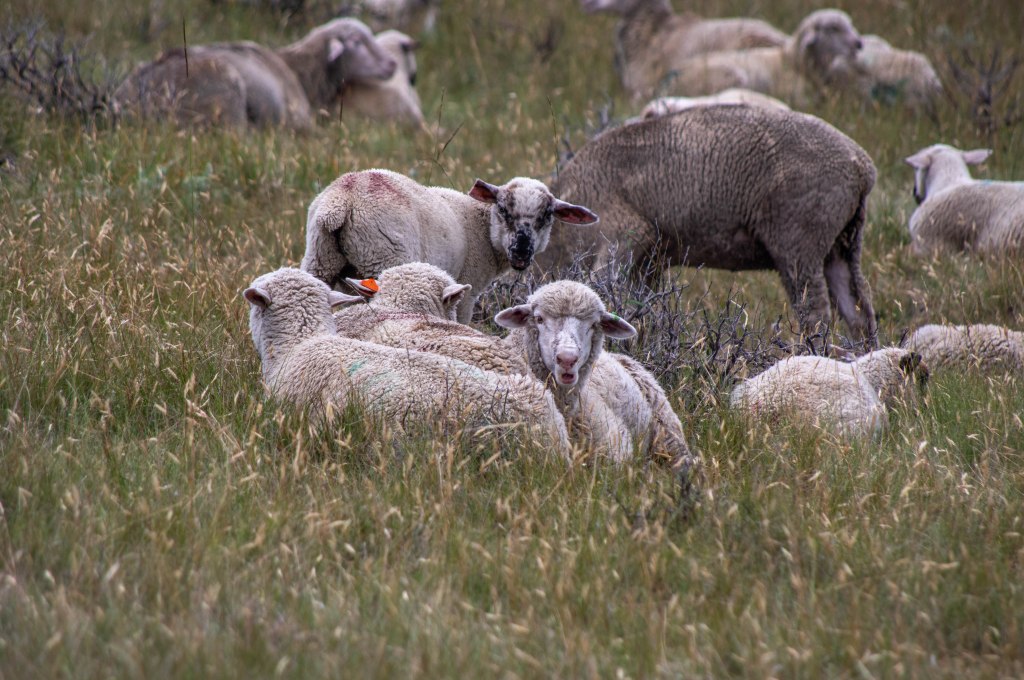
“He must manage his own household competently and have his children under control with all dignity. (If anyone does not know how to manage his own household, how will he take care of God’s church?)”
It has been a while since I have posted on 1 Timothy, so let’s take a minute and review where we are. Paul is telling Timothy what the requirements for elders/overseers need to be as he plants churches in Ephesus. These qualifications remain in effect today as we look at qualifications for elders and pastors for our churches. Paul has listed these eleven things: above reproach, the husband of one wife, self-controlled, sensible, respectable, hospitable, able to teach, not an excessive drinker, not a bully but gentle, not quarrelsome, not greedy.
Paul is now going to move on to three more qualifications which he will describe in a little more detail. Verses four and five are about how the elder/overseer is to conduct himself in his family. Today’s post will focus on this.
Paul writes, “He must manage his own household competently and have his own children under control with all dignity.” He then adds an explanation-if he can’t manage his own household, how is he going to manage the church? Paul gives Titus similar instructions. “An elder must be blameless, the husband of one wife, with faithful children who are not accused of wildness or rebellion” (Titus 1:6).
The family is the building block of society. Families make up the church. It is important that pastors show by example as they raise their families how to manage their household well. The key phrase here is “with all dignity.” Paul gives instructions to all fathers in two of his other letters. In Ephesians he writes, “Fathers, don’t stir up anger in your children, but bring them up in the training and instruction of the Lord” (6:4). And in Colossians, “Fathers, do not exasperate your children, so that they won’t become discouraged” (3:21). These are examples of what Paul means when he says with all dignity.
I want to expand on the idea of a pastor ruling his own family competently with dignity before being entrusted with a church. When Paul left Ephesus for the last time, he said this to the leaders. “Be on guard for yourselves and for all the flock of which the Holy Spirit has appointed you as overseers, to shepherd the church of God, which he purchased with his own blood” (Acts 20:28). A pastor’s job is to shepherd his flock. We can see how well he is shepherding his family to see if he is qualified to shepherd the bigger flock of a congregation. Michael Eaton puts it this way in his commentary of 1 Timothy. “The family is itself like a little church. The elders that Timothy is to look for must be people who have demonstrated their ability to shepherd a little congregation, the family, before attempting to be one of the shepherds of a large congregation.”
This may raise the question in some people’s minds about a pastor whose adult children are no longer walking with the Lord. Does this disqualify them from leadership positions? No. Every person must decide for themselves to place their trust in God. He has given each of us free will. While we do everything we can to raise our children to place their faith in Christ, the decision is ultimately theirs. We can watch how a pastor interacts with his adult children, but their behavior is on them. In this case, the church would be wise to look at all of the other qualifications of the elder/overseer, watch how he manages his household (those that live in his house), and look at the last two qualifications that Paul lists. But the behavior of adult children who are no longer under the influence of the parents should not disqualify an elder or overseer.
I will cover the last two qualifications for an elder/overseer in my next blog post before we move on to the position of deacon.
Grace be with you!
 Abundant Joy